
 Fact Checked

Highlights
- Visigard is marketed as a natural eye health supplement designed to protect against age-related vision decline through antioxidant defense.
- It combines 7 ingredients — including lutein, zeaxanthin, bilberry extract, zinc, copper, vitamin C, and vitamin E — tied to ocular health research.
- Lutein and zeaxanthin are present at half the doses used in the AREDS2 clinical trial at the default single-capsule serving.
- The brand’s “over 95% improvement” claim is self-reported by customers, not backed by a clinical study.
- Buyers looking for a formula that more closely matches AREDS2 benchmarks may find better-dosed alternatives on the market.
Overview
Your eyes don’t send many warnings before things start to change. Colors shift subtly. Reading feels like more work than it used to. Night driving gets a little harder. By the time most people start thinking seriously about eye health, some of that decline is already underway.
Visigard, made by Nutreance, positions itself as an early and ongoing defense against exactly that. The formula brings together seven antioxidant ingredients, the company says that are clinically proven to help preserve vision clarity, color perception, and macular health as you age. The pitch is clean, the packaging is professional, and the product page makes confident claims.
But confident claims are worth examining closely, especially in a category where buyers are making real decisions about long-term health. We’ve gone through Visigard’s full ingredient list, dosing disclosures, customer feedback, and the actual science behind each component to give you a grounded picture.
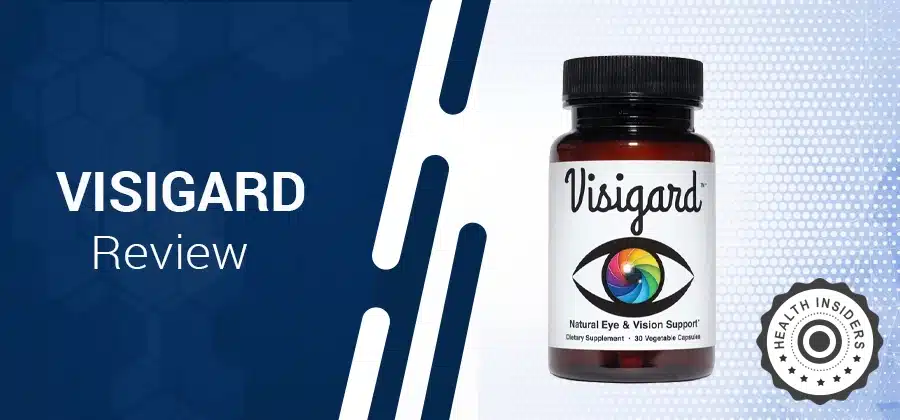
– Visigard Health Insiders Images
What Is Visigard?
Visigard is a vegetable capsule supplement made by Nutreance LLC, based in Greenwich, CT. It’s sold direct-to-consumer through the Nutreance website and targets adults over 40 who are concerned about oxidative damage to the macula — the region of the eye responsible for central vision, fine detail, and color differentiation.
The company states the product is manufactured in a GMP-certified, FDA-inspected facility in New York, and that each batch is tested before bottling to confirm non-GMO, vegan, and gluten-free status. Those are meaningful quality markers. What’s missing is independent third-party verification — no NSF, USP, or publicly available Certificates of Analysis are provided.
Visigard – Quick Facts & Specs
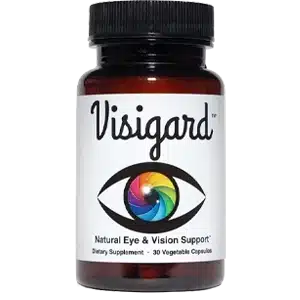
- Form: Vegetable Capsule
- Type: Dietary Supplement
- Brand: Nutreance
- Benefit: Antioxidant support for macular and ocular health
- Price: $39.95 / 30-day supply
- Used For: Age-related vision decline, oxidative stress defense
- Recommended Dosage: 1–2 capsules daily
- Number of Servings Per Container: 30
- Active Ingredients: Vitamin C, Vitamin E, Zinc, Copper, Lutein, Zeaxanthin, Bilberry Extract
Pros And Cons of Visigard

- Uses Albion® chelated minerals for better absorption
- Clean excipient list, no fillers beyond capsule shell
- Covers the core AREDS2-adjacent ingredient set

- Bilberry at 25 mg is below the effective doses in clinical studies
- No third-party lab testing or public Certificates of Analysis
- “95% improvement” claim is self-reported, not trial-backed
- The 30-day refund window is shorter than most competing products
- No Omega-3s, which feature in the modern AREDS2-adjacent approach
Advertisement
*All individuals are unique. Your results can and will vary.
How Does Visigard Work?
The mechanism behind Visigard is rooted in the oxidative stress hypothesis of age-related macular degeneration (AMD). As the body ages, its natural antioxidant defenses weaken, and the photoreceptor cells in the macula become increasingly vulnerable to damage from free radicals, unstable molecules produced during normal metabolism and amplified by UV light exposure.
By supplying a concentrated dose of antioxidants, the formula aims to replenish the protective shield around those cells. Lutein and zeaxanthin, specifically, accumulate in the macula and serve as a kind of internal filter against harmful blue light. Vitamin C and E work as broader antioxidant reinforcements. Zinc helps activate antioxidant enzymes in the eye. Copper accompanies zinc to prevent zinc-induced copper depletion. Bilberry is included for microcirculation and retinal support.
The approach has plausible science behind it, and several ingredients in this formula have meaningful clinical research at their back. The question is whether the amounts used in Visigard match what those studies actually tested, and, in a few key areas, that gap is noticeable.
Visigard Ingredients
Visigard discloses all ingredient doses on its supplement facts label, which is a positive baseline. Here’s what the science says about each one and where the formula holds up versus where it falls short.
Vitamin C (250 mg as ascorbic acid) – Vitamin C is found naturally in high concentrations in the aqueous humor of the eye and is one of the primary antioxidants protecting ocular tissue. It was a core component of the landmark AREDS trial, used at 500 mg daily as part of a combination shown to reduce AMD progression risk by approximately 25% in high-risk individuals.
A cross-sectional study published in PubMed found that higher vitamin C intake was associated with significantly reduced odds of cataracts and glaucoma.[1] Visigard’s 250 mg is half the AREDS dose, meaningful for general antioxidant support, but below the level studied in major trials.
Vitamin E (67 mg as d-α-tocopherol succinate) – Vitamin E is a fat-soluble antioxidant that protects the retina’s lipid-rich membranes from oxidative damage. Research published in PMC notes that α-tocopherol attacks free radicals to interrupt lipid oxidation chains in retinal tissue, particularly important given the retina’s high fatty acid concentration. The AREDS trial used 400 IU (approximately 268 mg) of vitamin E.[2] At 67 mg, Visigard provides roughly a quarter of that. The d-α-tocopherol succinate form is the natural, more bioavailable form; a smart formulation choice, but the dose still falls short of clinical benchmarks.
Zinc (22 mg as zinc bisglycinate, Albion®) – Zinc plays a well-documented role in retinal function and antioxidant enzyme activity. Studies suggest that AMD-affected eye tissue may contain up to 24% less zinc than healthy tissue, and zinc supplementation has been shown in placebo-controlled trials to slow visual loss in macular degeneration patients.[3] The original AREDS formula used 80 mg zinc oxide; updated expert guidance has moved toward 25 mg as more appropriate for general use. Visigard’s 22 mg is close to that modern target, and the Albion® bisglycinate chelate form absorbs significantly better than zinc oxide.
Lutein (5 mg from Marigold Flower Extract) – Lutein concentrates in the macular pigment and filters blue light making it one of the most directly relevant ingredients in any eye health formula. The AREDS2 trial the largest and most cited randomized controlled trial on eye nutrition, used 10 mg lutein daily.[4] Participants with the lowest dietary lutein intake who received 10 mg supplementation showed up to a 26% reduced risk of developing advanced AMD. Visigard supplies 5 mg per capsule, half the studied dose at the default single-capsule serving.
Zeaxanthin (1 mg from Marigold Flower Extract) – Zeaxanthin works alongside lutein in the macula as a co-protectant for photoreceptor cells. The AREDS2 study used 2 mg zeaxanthin daily.[5] Visigard supplies 1 mg again, half the benchmark. Both lutein and zeaxanthin only reach AREDS2 levels if the user takes two capsules daily, which halves the bottle’s supply to 15 days.
Benefits of Visigard
Taking the ingredient evidence at face value, here are the areas where Visigard may offer genuine support:
May help defend against macular oxidative stress: Vitamins C and E, zinc, and the carotenoids all play documented roles in the antioxidant pathways that protect macular tissue. Even at sub-AREDS doses, they contribute to the body’s natural defenses.
May support macular pigment density over time: Lutein and zeaxanthin at 5 mg / 1 mg per capsule are below clinical benchmarks, but for users with very low dietary intake of these carotenoids, even partial supplementation may offer some measurable benefit.
Delivers quality mineral form: The Albion® chelated zinc and copper are a practical advantage over oxide forms used in many competing products better absorbed and less likely to cause GI irritation.
Advertisement
*All individuals are unique. Your results can and will vary.
Side Effects
Visigard’s ingredients are well-tolerated by most healthy adults and the formula contains no stimulants. That said, some users may experience mild effects:
- Digestive discomfort — Zinc and copper on an empty stomach can cause mild GI upset in sensitive individuals. Taking the capsule with food reduces this risk.
- Vitamin E interaction risk — At higher doses (two or more capsules daily), users on blood-thinning medications should check with a physician, as high vitamin E intake can affect platelet aggregation.
- Loose stools — Vitamin C above 500 mg daily is associated with GI discomfort in some people. At the single-capsule serving (250 mg), this is unlikely to be an issue.
The label includes a standard caution against use during pregnancy or nursing and recommends consulting a physician for those with pre-existing conditions or on prescription medications.
Is Visigard Safe?
Visigard’s ingredient profile carries a generally acceptable safety record. GMP certification and FDA inspection of the New York manufacturing facility provide a baseline of manufacturing accountability. The chelated mineral forms are gentler on the digestive system than oxide forms.
Where confidence is harder to establish:
- No third-party testing certifications (NSF, USP, Informed Sport)
- No publicly available Certificates of Analysis
- The self-reported “95% improvement” claim is not independently verified
None of these gaps makes the product unsafe, but for buyers who factor independent quality verification into their decision, increasingly common among health-conscious consumers, Visigard doesn’t fully deliver that reassurance.
Who may benefit from Visigard:
- Adults over 40 with early concerns about macular health
- People with low dietary intake of lutein and zeaxanthin from leafy greens
- Those who specifically need a vegan, gluten-free, US-made capsule option
Who may want to look elsewhere:
- Users seeking AREDS2-equivalent dosing without doubling the daily serving
- Those with intermediate or advanced AMD (consult an ophthalmologist for clinical-grade formulas)
- Buyers who prioritize third-party verified supplement quality
Visigard Customer Reviews
Here’s what some of the users had to say regarding Visigard:
I’ve barely had time to form an opinion in 30 days, let alone see real results. Most eye supplements I’ve looked at give you 60 or 90 days. Not saying it doesn’t work, just not enough time to know for sure before the guarantee runs out – Mark L.
I wanted something to support my eyes long term and this checked a lot of boxes US made, clean label, no artificial stuff. What I couldn’t find was any independent lab testing to confirm what’s actually in each batch. For a supplement I’m planning to take every day, that matters to me. – Nathan J.
I’ve been taking one capsule daily for about six weeks. Nothing dramatic to report, no side effects, but no noticeable change in how my eyes feel either. Ingredient quality seems fine, just wish the amounts were stronger out of the gate – Rachel K.
Where To Buy Visigard
Visigard is available through Amazon:
- 1 Bottle ( 30 Day Supply ) – $39.95
Free shipping is available when adding 3 or more bottles. Auto-delivery is optional, not required. The product comes with a 30-day money-back guarantee, which is shorter than the 60-day window most competing eye supplements offer.
At the single-capsule daily dose, one bottle lasts 30 days. For users who want to reach AREDS2 benchmark levels for lutein and zeaxanthin, two capsules per day reduces that to a 15-day supply, effectively doubling the monthly cost to approximately $80.
Advertisement
*All individuals are unique. Your results can and will vary.
Final Verdict
Visigard is a clean, well-manufactured eye supplement with a reasonable antioxidant foundation and quality chelated minerals. For buyers who want a vegan, US-made formula with no fillers, it’s a respectable option in that niche.
That said, lutein and zeaxanthin, the two ingredients with the strongest modern evidence for macular support, come in at half the AREDS2-studied doses at the default one-capsule serving. Bilberry at 25 mg is unlikely to move the needle based on available research. No third-party testing is published, and the “95% improvement” claim is self-reported.
At $39.95 for 30 capsules, it’s fairly priced for what it is, but buyers expecting AREDS2-level protection should know they’re not quite getting it here without doubling the dose.
Frequently Asked Questions
Q: Does Visigard really work?
A: The formula contains ingredients with genuine ocular health research behind them. Whether it delivers meaningful protection depends heavily on the dose. Lutein and zeaxanthin only reach clinically studied levels if you take two capsules daily rather than one.
Q: How long does it take to see results?
A: Eye antioxidant supplements are designed for long-term risk reduction, not short-term vision improvement. Meaningful changes to macular pigment density from lutein and zeaxanthin typically require several months of consistent supplementation.
Q: Is Visigard FDA-approved?
A: No, Dietary supplements are not FDA-approved before sale. Nutreance states the product is manufactured in an FDA-inspected facility, which refers to manufacturing compliance not product approval.
Q: Is Visigard vegan?
A: Yes, Nutreance states the formula and capsule shell are vegan, gluten-free, and non-GMO, with testing at both raw ingredient and finished product stages.
Q: What is the return policy?
A: Nutreance offers a 30-day money-back guarantee from the original purchase date, including on fully consumed bottles.
Q: Can I take Visigard with a multivitamin?
A: Generally, yes, but check the total daily amounts of vitamin C, E, and zinc across both products. Combining Visigard with a multivitamin could push zinc intake higher than needed.
Q: Is the bilberry extract standardized?
A: The label does not state an anthocyanin standardization percentage, which makes it impossible to evaluate the actual potency of the extract used.
5 Sources
Health Insiders relies on peer-reviewed studies, academic research institutions, and medical associations. We avoid using tertiary references. You can learn more about how we ensure our content is accurate and current by reading our editorial policy.
[1] Exploring the association between composite dietary antioxidant index and ocular diseases: a cross-sectional study https://pubmed.ncbi.nlm.nih.gov/39953504/
[2] Nutrients for the aging eye https://pmc.ncbi.nlm.nih.gov/articles/PMC3693724/
[3] Zinc and Autophagy in Age-Related Macular Degeneration https://pmc.ncbi.nlm.nih.gov/articles/PMC7404247/
[4] Secondary analyses of the effects of lutein/zeaxanthin on age-related macular degeneration progression: AREDS2 report No. 3 https://pubmed.ncbi.nlm.nih.gov/24310343/
[5] The Age-Related Eye Disease Study 2 (AREDS2): study design and baseline characteristics (AREDS2 report number 1) https://pubmed.ncbi.nlm.nih.gov/22840421/

 Strong Evidence
 Moderate Evidence

 Yes
Yes

 Marissa Ford, MS, RD, LD
 See Our Editorial Process
 Meet Our Review Board
 This article changed my life!
 This article was informative.
 I have a medical question.
 Ask a Question
 This article contains incorrect information.
 This article doesn’t have the information I’m looking for.
Expected Better Vision Support Overall
I used VisiGard consistently for several weeks hoping to improve my eye comfort and clarity. While I noticed slightly less eye strain, the overall benefits were subtle and took longer to appear than I expected.
Average Results With Gradual Improvements
The supplement was easy to add to my daily routine and didn’t cause any problems. However, the changes in my vision and eye fatigue were fairly modest, making the overall experience feel average rather than impressive.
Promising Ingredients But Limited Benefits
VisiGard contains several ingredients commonly associated with eye health, but my personal results were mixed. I experienced only minor improvements in visual comfort, and the overall impact was less noticeable than I had hoped after regular use.