
 Fact Checked


Highlights
- Hepagard is a daily capsule supplement that aims to support healthy liver function and digestion.
- Each bottle provides a 30-day supply, and the brand recommends 1 to 2 capsules a day as the standard dose.
- The formula includes NAC, milk thistle, dandelion root, artichoke leaf and choline bitartrate.
- NAC helps the body make glutathione, and choline plays a role in normal liver function.
- The product details we reviewed do not specify the amount of each ingredient.
- The brand’s 30-day study reported less bloating, heartburn and fatigue, but it is small and unpublished.
- Customer reviews on the official site are high, while reviews on other sites are more mixed.
- The capsules are vegan, gluten-free and non-GMO.
- Pricing starts at $39.95* per bottle, with a 30-day money-back guarantee.
- Claims about fatty liver protection and detox need stronger independent evidence.
Nutreance is a US supplement company that sells its products directly through its own website. The brand markets its main liver supplement, Hepagard, as a natural liver support formula that features N-Acetyl Cysteine (NAC). It is a vegan capsule that contains NAC, milk thistle, dandelion root, artichoke leaf and choline bitartrate. Each bottle is sold as a 30-day supply. The brand suggests 1 to 2 capsules a day, and up to 4 for what it calls advanced cases. A single bottle costs $39.95*.
The idea behind Hepagard is easy to follow. Nutreance says that as fat builds up in the liver, the liver struggles to make enough glutathione, the antioxidant it calls “the mother of all antioxidants.” Less glutathione means more inflammation and stress on liver cells. Help the body make more glutathione, the brand suggests, and you help the liver stay healthy.
But does Hepagard really work? Can it ease bloating and heartburn the way the sales page says? And how much of each ingredient do you get in every capsule?
Ingredient transparency is the first weak spot. The sales page names all five ingredients, but the amount of each one was not shown in the product details we reviewed. That makes it hard to compare Hepagard with the research.
Nutreance does point to its own clinical study. It was a placebo-controlled trial with 50 people over 30 days. However, it was run by the company and has not been published in any peer-reviewed journal we could find.
Let’s look at Hepagard’s ingredients, the science, its marketing claims, customer reviews, pricing and safety. We’ll also compare it with WOWMD® Liver Supportand Gundry MD Complete Liver Support.
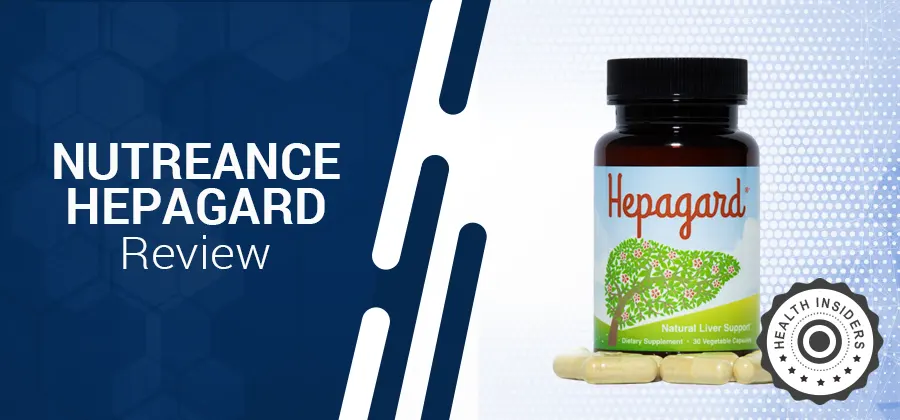
Hepagard – Health Insiders Images
Hepagard Ingredient Analysis
Nutreance Hepagard is a capsule supplement made to support normal liver function, antioxidant protection and digestive comfort.
The formula contains these five ingredients:
- N-Acetyl Cysteine (NAC): amount not shown
- Milk Thistle: amount and silymarin level not shown
- Dandelion Root: amount not shown
- Artichoke Leaf: amount not shown
- Choline Bitartrate: amount not shown
Nutreance says the capsules are vegan, gluten-free and non-GMO, and that each batch is tested before bottling. The brand shows a Supplement Facts panel as an image on its site, but none of the doses appear in the written product details we reviewed.
NAC is the main ingredient in Hepagard’s marketing. It provides cysteine, which the body needs to make its own glutathione. A review on the uses of N-acetyl cysteine discusses NAC’s antioxidant properties and its medical uses, including its long history in hospitals for acetaminophen overdose.[1] For fatty liver, the research is smaller. In a small clinical trial in people with fatty liver, NAC led to a significant drop in the liver enzyme ALT after three months compared with vitamin C.[2] A more recent placebo-controlled trial gave patients 600 mg of NAC three times a day for eight weeks. Without Hepagard’s NAC dose, we can’t tell how close it comes to these amounts.
Milk Thistle is rich in silymarin, an antioxidant compound studied for its protective effects on the liver. In a randomized clinical trial in people with non-alcoholic steatohepatitis, patients took 210 mg of silymarin a day for eight weeks and saw a larger fall in liver enzymes than the placebo group.[3] Still, the National Center for Complementary and Integrative Health reports mixed results for milk thistle in liver diseases.[4] Many brands list their silymarin level so buyers can compare it with research. Hepagard does not, at least not in the details we reviewed.
Dandelion Root and Artichoke Leaf have long been used for digestive and liver support. Artichoke has the strongest human data. A meta-analysis of eight clinical trials found that artichoke significantly lowered the liver enzymes AST and ALT compared with placebo, especially in people with non-alcoholic fatty liver disease. Doses in these studies vary a lot.[5] A pilot double-blind trial used 600 mg a day of artichoke extract a day for two months.[6] Evidence for dandelion’s liver benefits comes mainly from animal studies. In one animal study on dandelion root extract, the extract protected mice from alcohol-induced liver damage and raised antioxidant levels in the liver, including glutathione.[7] Human trials have not confirmed this yet.
Choline is important for normal liver function and fat transport. In a controlled diet study in adults, 77% of men and 80% of postmenopausal women developed fatty liver or muscle damage when choline was removed from their diet.[8] The NIH Office of Dietary Supplements lists an adequate intake of 425 to 550 mg a day for adults.[9] Hepagard’s choline dose was not shown, so we can’t say how much it adds to your daily intake.
The biggest drawback is the missing dose information. Hepagard’s ingredients have useful roles in the body. But with no amounts in the details we reviewed and no published trial on the finished product, its liver claims are hard to check.
Readers can also explore our best liver supplements guide to compare ingredients, benefits, and liver support formulas.
Advertisement
*All individuals are unique. Your results can and will vary.
Scientific Evidence
Research showing that an ingredient does something useful in the body is not the same as research showing that a finished supplement works.
Hepagard’s ingredients have been studied for liver enzymes, antioxidant protection and fat transport in the liver. NAC helps the body make glutathione. Choline is needed to move fat out of liver cells. Milk thistle and artichoke have human trials linked to lower liver enzymes.
The problem Hepagard targets is real. One clinical paper notes that non-alcoholic fatty liver disease affects up to 24% of the general population in various countries, which fits the sales page’s “1 in 4 people” figure. Oxidative stress also plays a known role in how fatty liver develops.
That gives Hepagard a logical starting point. However, it does not prove that taking this capsule will reduce liver fat, lower liver enzymes or protect against fatty liver.
Several factors affect how a supplement may perform:
- The amount of each active ingredient
- Extract quality and standardization
- How well the ingredients are absorbed
- How long the supplement is taken
- Whether the person has a liver condition
- Medication use and general health
- Diet, alcohol intake, weight and activity level
Milk thistle is a good example. Some fatty liver trials show lower liver enzymes, but larger reviews of liver disease in general show mixed results.
Artichoke shows a similar pattern. Pooled trials found lower liver enzymes, but those products and doses were different from Hepagard. The results don’t apply directly to this formula.
Then there is the Hepagard clinical study itself. Nutreance says 50 people took part for 30 days. Within two weeks, 90% reported less bloating. Four out of five reported less heartburn and indigestion, and four out of five felt more energy by the end. No one reported side effects.
These numbers sound good, but they are self-reported symptoms. The sales page does not show how the placebo group did. Without that comparison, it is hard to know how much of the change came from Hepagard. The study also did not measure liver enzymes or liver fat, at least not in the results shown on the sales page.
The strongest proof would be a published, independent human trial measuring liver enzymes or liver fat before and after taking Hepagard. No trial of this kind was found for the complete formula.
Overall, Hepagard’s ingredients provide a reasonable base for liver and antioxidant support. Independent human studies on the finished product are still needed.
Our guide to liver cleanse and detox supplements explains how popular herbal ingredients may support normal liver function and antioxidant protection.
Marketing Claims That Need More Context
“Fatty Liver Is Not Forever”
This is the headline of Hepagard’s sales page. The page then explains how fatty liver can lead to inflammation and cirrhosis, and presents Hepagard as the way to protect yourself.
Fatty liver is common and can progress, and research supports that. But the headline suggests that Hepagard can reverse or prevent liver disease. No published trial shows that Hepagard reduces liver fat or changes the course of fatty liver.
The page’s own disclaimer says the product is not intended to diagnose, treat, cure or prevent any disease. For fatty liver, healthy eating, exercise, gradual weight loss and care from a healthcare professional remain the proven approaches.
“Clinically Proven to Detoxify the Body”
Nutreance says Hepagard is clinically proven to detoxify the body and reduce heartburn, bloating and indigestion within 30 days.
“Clinically proven” is a strong phrase for one small company study. The trial had 50 people, ran for one month and has not been peer reviewed. “Detoxify” is also hard to measure, and the study results on the sales page don’t show any detox test.
The digestive results are encouraging. They would carry more weight if the full study, including the placebo group, were published.
“The Mother of All Antioxidants”
The sales page calls glutathione “the mother of all antioxidants” and says the liver can’t make enough of it as fat builds up.
Glutathione does play a central role in the liver’s antioxidant defense, and NAC does help the body make it. That part has solid science behind it.
But the sales page treats low glutathione as the main biological cause of fatty liver. In reality, fatty liver has many causes, including diet, weight, insulin resistance, alcohol and genetics. Raising glutathione is one piece of the picture, not the whole answer.
“Safe With No Short-Term or Long-Term Health Risks”
Nutreance claims Hepagard poses no short-term or long-term health risks when users follow the recommended dosage and that people can take it with most medications.
Most people generally tolerate the ingredients well. Still, no supplement can promise zero risk, and a 30-day study of 50 people is too small to catch rare or slow-developing problems.
Possible side effects include nausea, bloating, stomach discomfort and loose stools. People with gallbladder problems should avoid dandelion, as its mild diuretic effects may interact with water pills or lithium. Milk thistle, dandelion and artichoke belong to the same plant family as ragweed, so people with that allergy should be careful. NAC may not suit people with asthma, or people taking nitroglycerin or blood thinners.
If you are pregnant or breastfeeding, have a liver or gallbladder condition, or take any medicine, speak to a healthcare professional first.
“Made in a GMP-Certified, FDA-Inspected Facility”
Nutreance says it manufactures Hepagard in a GMP-certified, FDA-inspected facility in New York and adds tamper-proof seals to every bottle. That is a good sign for quality.
However, we could not find publicly available batch-specific lab reports or certificates of analysis in the information we reviewed. Third-party testing results would make these claims easier to trust.
“Vegan, Gluten-Free and Non-GMO”
The brand says it checks each ingredient to ensure it meets vegan, gluten-free, and non-GMO standards and uses plant-based materials to make the capsules. This is useful for people who avoid animal products or gluten.
Natural does not always mean right for everyone, though. The same allergy and medication cautions above still apply.
Our Verdict on the Marketing Claims
Hepagard combines NAC, milk thistle, dandelion root, artichoke leaf and choline for normal liver function and digestive comfort.
Some of these claims rest on solid nutrition science. NAC helps the body make glutathione. Choline is needed for normal fat transport in the liver. Milk thistle and artichoke have been studied for their effects on liver enzymes.
The bigger question is how far these facts support Hepagard’s fatty liver and “clinically proven” marketing.
No published trial shows that the complete formula lowers liver enzymes, reduces liver fat or detoxifies the body. The company’s study is small, unpublished and based on self-reported symptoms.
Dosing is another issue. None of the ingredient amounts were shown in the details we reviewed, so there’s no way to compare Hepagard with the doses used in research.
General claims about antioxidant and digestive support are reasonable based on the ingredients. Stronger claims about protecting against fatty liver need clinical proof. Hepagard would be easier to judge if Nutreance listed all doses in writing, shared batch test reports and published its full study results.
Advertisement
*All individuals are unique. Your results can and will vary.
Hepagard vs. Popular Liver Support Supplements
WOWMD® Liver Support
WOWMD® Liver Support is made for people who want simple, daily liver support. It promotes normal liver function, antioxidant support and healthy fat metabolism.
The formula combines well-known liver herbs: milk thistle, artichoke extract, burdock root, alfalfa and yarrow. These herbs have long been used for liver and digestive wellness and appear in many popular liver supplements.
Hepagard takes a different route. It pairs two of the same herbs, milk thistle and artichoke, with NAC and choline, and builds its pitch around glutathione.
So which should you choose? It comes down to focus and trust.
WOWMD®’s formula is built only around the liver. Every herb is there for liver and digestive health, so you know what you’re getting. It also offers third-party quality testing, which Hepagard does not publicly show.
WOWMD® also gives you more time to decide. It offers a 60-day money-back guarantee for eligible first-time, single-bottle customers. Hepagard’s guarantee lasts 30 days, although it does cover empty bottles.
The suggested use is 2 capsules twice a day. Hepagard starts at 1 to 2 capsules a day.
If you want a focused herbal liver formula with added testing and a longer trial period, WOWMD® Liver Support is a strong choice. You can explore more liver supplement reviews to compare different formulas, ingredients, and customer experiences.
Winner: WOWMD® Liver Support
Gundry MD Complete Liver Support
Gundry MD Complete Liver Support keeps things simple. It uses only 3 botanicals, orange peel extract, milk thistle and dandelion root, to support healthy digestion, metabolic wellness and normal liver function.
Hepagard also has a short ingredient list, with five ingredients. Two of them, milk thistle and dandelion root, overlap with Gundry MD.
Each Gundry MD ingredient has a clear role. Milk thistle contains silymarin, which has been studied for its antioxidant and liver-supporting effects. Dandelion root is a long-used digestive tonic. Orange peel extract adds citrus compounds known for their antioxidant and metabolic properties.
It is also easy to fit into your day. You take two softgels a day, much like Hepagard’s standard dose.
Gundry MD offers more buyer protection as well. It provides third-party testing and a 90-day money-back guarantee, which gives you three full months to see if it works for you.
If you want a simple formula with longer guarantee coverage, Gundry MD Complete Liver Support is a good option.
Winner: Gundry MD Complete Liver Support
Pros and Cons of Hepagard

- Combines five ingredients that each have some research for liver or digestive health.
- Includes NAC, which helps the body make its own glutathione.
- Contains artichoke leaf, which has human trials linked to lower liver enzymes.
- Contains choline, an essential nutrient for normal liver function.
- Has a company-run, placebo-controlled study that reported less bloating and heartburn.

- We found no published, independent human trial evaluating the complete Hepagard formula.
- The company study included only 50 people, and independent experts have not peer-reviewed it.
- Participants reported their own results, and the available study details do not include placebo group numbers.
- The details we reviewed do not specify the amount of each ingredient.
- The product label does not specify the milk thistle silymarin level.
- Dandelion root’s liver benefits come mainly from animal studies.
- The “clinically proven” and fatty liver claims go further than the evidence supports.
- Research on single ingredients does not prove the finished supplement will give the same results.
- Some customers report little change after several weeks.
- Possible side effects include nausea, bloating, stomach discomfort and loose stools.
- NAC and dandelion may interact with some medications.
- Batch-specific lab reports are not publicly available.
- The 30-day guarantee is shorter than some competitors offer.
- Hepagard should not replace medical treatment for liver conditions.
Where To Buy Hepagard?
Hepagard is available online through third-party sites like Amazon. Always compare current listings, seller details, and shipping charges before ordering.
Shipping costs may also vary depending on location and order value.
Advertisement

*All individuals are unique. Your results can and will vary.
Expert Advice on Hepagard
Hepagard is easy to fit into a daily routine. You take 1 to 2 capsules in the morning, with or without food. The price is fair and the refund policy is generous. However, customer feedback is mixed once you look beyond the official site.
On the official site, Hepagard holds an average of 4.8 out of 5 from 178 ratings. One user said she noticed a difference within a few days. Another said his pain started to ease after two months and he ordered three more bottles. One reviewer said her husband’s stomach looked a little smaller.
Other reviewers were more careful. One gave it three stars and said it helped his dry, itchy skin, but not to expect much from the first bottle. On a third-party review site, two buyers said their results were subtle. They also said the small company study made them question the stronger claims.
These stories don’t prove that Hepagard works or that it doesn’t. They do show that results vary a lot from person to person.
The missing ingredient amounts, the small unpublished study and the lack of independent testing make it hard to recommend Hepagard with full confidence for liver health.
Final Verdict
Hepagard is a capsule supplement by Nutreance that combines NAC, milk thistle, dandelion root, artichoke leaf and choline. The formula aims to support normal liver function, antioxidant defenses, and digestive comfort.
Several of these ingredients have clear roles in the body. NAC helps the body produce glutathione, while the liver uses choline to transport fats. Artichoke and milk thistle have human trials linked to lower liver enzymes. However, the details we reviewed do not specify the amount of each ingredient, and researchers have not conducted any published, independent human trials on the complete formula.
Customers share mixed feedback. Some users report less bloating, less pain or better energy, while others notice little difference. The “clinically proven” claim is the main selling point, but it rests on one small company study.
WOWMD® Liver Support offers a herbal formula with milk thistle, artichoke extract, burdock root, alfalfa and yarrow, along with advertised third-party testing.
Gundry MD Complete Liver Support keeps things simple with orange peel extract, milk thistle and dandelion root in softgels, with a 90-day money-back guarantee.
For people who want a more focused, tested liver formula, WOWMD® Liver Support and Gundry MD Complete Liver Support may be better options. Keep in mind that clinical research has not established that any liver supplement can reverse liver damage, treat liver disease, or replace medical care.
9 Sources
Health Insiders relies on peer-reviewed studies, academic research institutions, and medical associations. We avoid using tertiary references. You can learn more about how we ensure our content is accurate and current by reading our editorial policy.
[1] A Review on Various Uses of N-Acetyl Cysteine https://pmc.ncbi.nlm.nih.gov/articles/PMC5241507/
[2] N-Acetylcysteine Improves Liver Function in Patients with Non-Alcoholic Fatty Liver Disease https://pmc.ncbi.nlm.nih.gov/articles/PMC3270338/
[3] Silymarin in treatment of non-alcoholic steatohepatitis: A randomized clinical trial https://pmc.ncbi.nlm.nih.gov/articles/PMC3894463/
[4] Milk Thistle https://www.nccih.nih.gov/health/milk-thistle
[5] The effects of Cynara scolymus L. supplementation on liver enzymes: A systematic review and meta-analysis https://pubmed.ncbi.nlm.nih.gov/34383355/
[6] Efficacy of artichoke leaf extract in non-alcoholic fatty liver disease: A pilot double-blind randomized controlled trial https://pubmed.ncbi.nlm.nih.gov/29520889/
[7] In vitro and in vivo hepatoprotective effects of the aqueous extract from Taraxacum officinale (dandelion) root against alcohol-induced oxidative stress https://pubmed.ncbi.nlm.nih.gov/20347918/
[8] Sex and menopausal status influence human dietary requirements for the nutrient choline2 https://pmc.ncbi.nlm.nih.gov/articles/PMC2435503/
[9] Choline https://ods.od.nih.gov/factsheets/Choline-HealthProfessional/

 Strong Evidence
 Moderate Evidence




 Yes


 Marissa Ford, MS, RD, LD
 See Our Editorial Process
 Meet Our Review Board
 This article changed my life!
 This article was informative.
 I have a medical question.
 Ask a Question

 This article contains incorrect information.
 This article doesn’t have the information I’m looking for.
Rating Snapshot: