Fact Checked

Highlights
- Inulin is a soluble fiber that gut bacteria feed on, and the most consistent finding in human studies is a rise in Bifidobacterium.
- Studies mostly used 5 to 20 g a day. Many capsules hold a small fraction of that, so the dose on the label matters.
- Gas and bloating are the most common side effects, and going slow helps.
- Some products bury inulin inside a blend or sell it next to loud claims, so a full label matters.
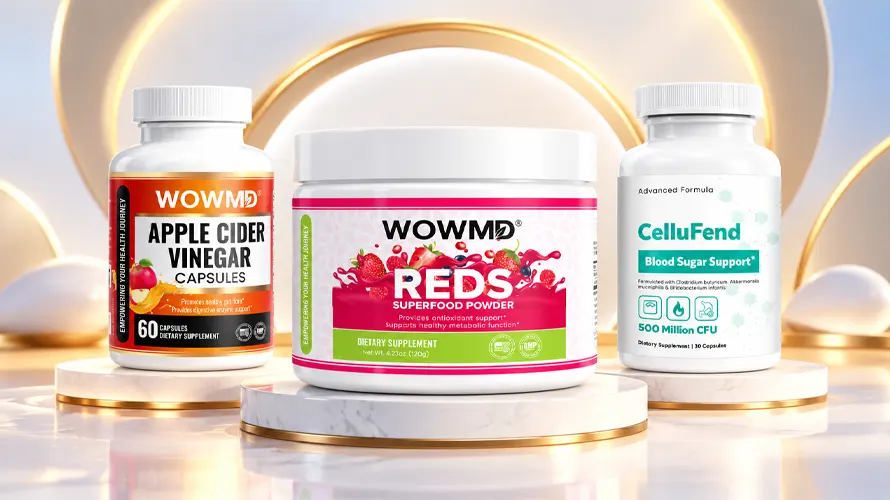
- WOWMD® Apple Cider Vinegar Capsules took the top spot for pairing inulin with probiotic and digestive enzymes in a simple daily routine.
Overview
Most people don’t get enough fiber. Bloating after meals, irregular bathroom habits and a gut that never quite feels settled are all common reasons people start looking at prebiotics, and inulin is usually the first name that comes up.
That’s where we can help. We’ve compiled the following list of the best inulin supplements that are based on inulin rather than a mention in the ingredients. Some are capsules, one is a powder that goes into water and one is a greens blend, which is a combination of several fibers.
We compared five popular options on ingredients, dose clarity, safety, customer feedback and value. Read on to find the one that fits how you actually eat, drink and take supplements.
What Are Inulin Supplements?
Inulin supplements are fiber products that help you get more prebiotic fiber into your diet and promote a healthy gut. Inulin is a soluble fibre found naturally in plants, including chicory root and Jerusalem artichoke. It is not completely absorbed and goes to the gut where bacteria break it down and utilize it as food. This is the reason inulin is not a probiotic, but a prebiotic.
There are supplements in a variety of forms. Capsules are easy to use but typically contain less, powders can be 5 grams per serving. Inulin might also be combined with other fibers, digestive enzymes, probiotics, and/or greens blends in combination formulas for additional digestive support.
But more ingredients don’t necessarily mean a better supplement. The serving size of inulin, the quality of the formula, and the formula’s composition are important. A clear, transparent label also makes it easier to know exactly what you’re getting each day.
How We Researched and Selected the Best Inulin Supplements
Methodology
Every product went through the same review. At Healthinsiders, we read each label, compared inulin amounts with the doses used in human studies, and checked what else was in the formula. Verified customer feedback was read for patterns, good and bad, and brand claims were checked against published research.
Formulas with clear labels, sensible ingredients and realistic promises scored higher. Price was weighed against what each serving delivers. And products that leaned on big medical claims lost points.
Criteria for Evaluation
- Inulin Content: Whether the amount is shown, and how it compares with study doses.
- Formula Balance: What inulin is paired with, such as probiotics, enzymes or other fibers.
- Safety and Tolerability: Known side effects, cautions and manufacturing standards.
- Customer Feedback: Patterns across verified reviews and tester accounts.
- Value for Money: Monthly cost next to what the serving delivers, plus the strength of the money-back guarantee.

Expert’s Advice on Inulin Supplements
Registered dietitian Brocha Soloff, founder of iHeart Health, explains that inulin supports digestive health by feeding beneficial bacteria in the gut. She notes that inulin can encourage the growth of good bacteria, including bifidobacteria and lactobacilli.
That advice shapes how this list should be read. Inulin supplements can be a useful way to add prebiotic fiber, but the amount you get per serving matters. A capsule with a few hundred milligrams offers much less inulin than a powder providing several grams. With that in mind, our Health Insiders research team’s top pick is WOWMD® Apple Cider Vinegar Capsules, which combines inulin with a probiotic and enzymes. Prefer a fruit-and-veggie scoop? WOWMD® Reds Superfood combines inulin with a broader superfood blend. And if fiber grams matter most, Barton Nutrition Fiber Greens is worth a look. Full ingredient breakdowns, pricing and feedback notes are below.
Why Trust Health Insiders?
Picking a gut supplement isn’t easy. Labels shout, and the research whispers. So the initial work gets done here first.
Each product on this page went through three checks: ingredient research against published studies, a look at verified customer feedback, and a review of how openly the brand shows its formula and doses. Claims come from clinical research and reputable medical sources instead of brand copy, and safety notes get as much space as the benefits.
The goal isn’t to bury you in milligrams and citations. At Health Insiders the list is updated as formulas, prices and research change, so you can narrow the field with clear reasons.
Our Top Picks of 2026
Best Inulin Supplement Overall: WOWMD® Apple Cider Vinegar Capsules
 Read The Reviews
Best Inulin Supplement in a Greens Scoop: WOWMD® Reds Superfood
Best Inulin Capsule With Added Resistant Starch: CelluFend
Best Chicory Root Inulin Formula: Alkalean GLP-1 Advanced Support
Best for Daily Fiber Grams: Barton Nutrition Fiber Greens
Best Inulin Supplements of 2026
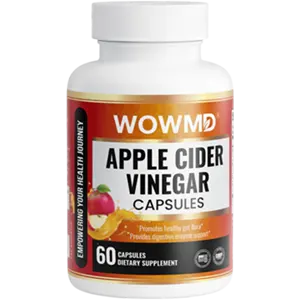
WOWMD® Apple Cider Vinegar Capsules – Best Inulin Supplement Overall
Overall Rating:

*All the prices listed here are as they appear on their websites and are subject to change.
- Combines inulin with Lactobacillus acidophilus, so a prebiotic and a probiotic share one serving.
- Adds DigeZyme®, a multi-enzyme complex, for daily digestive support.
- Includes organic apple cider vinegar powder without the sharp taste of the liquid.
- Keeps things simple with two capsules a day.
WOWMD® Apple Cider Vinegar Capsules are built around four ingredients: organic apple cider vinegar powder, inulin, Lactobacillus acidophilus and DigeZyme®. It’s a good fit if you want gut support in one small routine and you’re not looking to measure powders or mix drinks.
- Form: Capsule
- Type: Supplement
- Brand: WOWMD®
- Benefit: Supports digestive wellness, gut balance and daily digestive comfort
- Active Ingredients: Organic apple cider vinegar powder, inulin, Lactobacillus acidophilus, DigeZyme®
- Dosage: 2 capsules daily with 6 to 8 oz of water, preferably with a meal
- Price: $41.60*
Pros
- Inulin sits next to a probiotic and digestive enzymes, so the formula covers more than one angle
- Easy two-capsule routine with no taste
- Gluten-free, vegan, non-GMO and allergen-free
- Made in the USA in a GMP-certified facility, with third-party lab tested ingredients
- 4.7 out of 5 across 451 verified reviews on the product page
- 60-day money-back guarantee on a first single bottle purchase*
Cons
- Best results build gradually with steady daily use
- Only available through the official website.
Good for weight management support
I added these to support my diet rather than relying on them alone to do the work. The appetite-moderating effect of ACV is real and I find I’m less driven to overeat. – Marcus W.
Good for gut health and metabolism together
The combination of ACV, inulin prebiotic, Lactobacillus acidophilus, and digestive enzymes in one capsule is a smart all-in-one gut health formula. – Raymond S.
WOWMD® Apple Cider Vinegar Capsules earn the top spot because they’re the easiest way on this list to get inulin as part of a fuller gut routine. The probiotic and enzyme pairing, the clean label and the 60-day guarantee make it a low-risk first pick. If your goal is a big jump in daily fiber, a powder will do more, but for steady, simple support this is the one to start with.
Why We Ranked It #1
Every product gets measured against the same criteria, and this one checks more boxes than the rest of the field.
What stood out to us:
- Inulin paired with Lactobacillus acidophilus and a multi-enzyme complex
- Two capsules a day, no mixing and no taste
- Gluten-free, vegan, non-GMO and allergen-free
- Third-party lab tested ingredients, GMP-certified and made in the USA
- Strong customer satisfaction
- 60-day money-back guarantee*
Gut health rarely comes down to one thing. Fiber, bacteria and digestion all play a part, and that’s what makes a combo formula like this one appealing.
Expert Evaluation
Reviewed by the Health Insiders Nutrition Research Team
Our editors went through the full ingredient list, the research behind inulin and probiotics, the manufacturing standards, label clarity and feedback from real users.
Our Findings
The biggest strength here is balance. Inulin feeds bacteria, Lactobacillus acidophilus adds a probiotic strain, and the enzyme complex rounds out a routine built for daily use. The trade-off is scale. A capsule can’t match the fiber load of a scoop, so this works best for people who want gentle, steady support and already eat a decent amount of fiber. The brand is also realistic about timing, describing a routine that builds over months and not days.
What Our Tester Says
Our tester, Jason Miller, appreciated the convenience of WOWMD® Apple Cider Vinegar Capsules compared with traditional liquid apple cider vinegar. The capsule format was easy to take with meals and avoided the strong taste and smell he associated with liquid ACV.
Jason also liked that the formula goes beyond apple cider vinegar by combining inulin, Lactobacillus acidophilus, and DigeZyme® for broader digestive wellness support. The simple two-capsule serving made it easy for him to stay consistent without measuring powders or preparing drinks.
Overall, Jason found WOWMD® Apple Cider Vinegar Capsules straightforward and convenient to include in his daily wellness routine. Individual experiences and results may vary.*
Ingredient Quality 4.8/5

Jason appreciated the well-rounded formula combining apple cider vinegar powder with inulin, Lactobacillus acidophilus, and DigeZyme® digestive enzymes.
Formula Transparency 4.7/5

Jason found the formula easy to incorporate into his routine and appreciated its combination of prebiotic, probiotic, and digestive enzyme ingredients.
Convenience 4.9/5

Jason found the two-capsule daily serving simple and convenient, especially since it avoided the strong taste and preparation required with liquid apple cider vinegar.
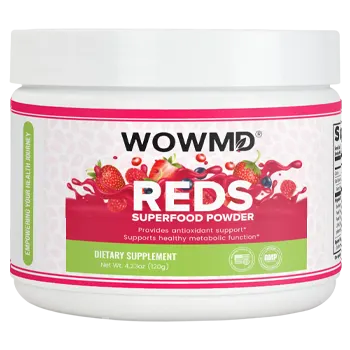
WOWMD® Reds Superfood – Best Inulin Supplement in a Greens Scoop
Overall Rating:
*All the prices listed here are as they appear on their websites and are subject to change.
- Mixes inulin and oat fiber with red beet, acai, pomegranate and strawberry.
- Adds probiotics, including Lactobacillus and Bifidobacterium strains.
- Comes as a one-scoop powder that tastes fruity and mixes into water.
- Suits people who’d rather drink their gut support than swallow capsules.
CelluFend is a dietary supplement marketed to support healthy blood sugar levels and weight management. Its plant-based, non-GMO formula comes in easy-to-swallow capsules without stimulants. The manufacturer states that batches undergo third-party testing and offers a 60-day money-back guarantee, with discounted multi-bottle packages.
- Form: Powder
- Type: Supplement
- Brand: WOWMD®
- Benefit: Supports digestive wellness, antioxidant activity and daily vitality
- Active Ingredients: Beet root, acai, pomegranate, strawberry, inulin, oat fiber, probiotics
- Dosage: 1 scoop (4 g) daily in 6 to 8 oz of water or a favorite drink
- Price: $55.20*
Pros
- Prebiotic fiber and probiotics in the same scoop as fruit and vegetable ingredients
- Fruity taste that’s easy to stick with
- Vegan-friendly
- Third-party lab tested ingredients, GMP-certified and made in the USA
- 4.7 out of 5 across 546 verified reviews on the product page
- 60-day money-back guarantee on a first single bottle purchase*
Cons
- Higher price than the capsule pick
- Only available through the official website.
Keeps me full longer
I drink this around 10 am, and I am not starving by lunch. It curbs my snack cravings and stops me from eating junk. – Ashley M.
Super refreshing taste
It tastes like a berry punch. I actually look forward to drinking it every day which never happens with health stuff. – Olivia M.
WOWMD® Reds Superfood is the pick for people who like a daily drink. It gives you inulin and oat fiber, probiotics and a colorful mix of plant ingredients without extra pills. It isn’t a high-fiber product, so think of it as an easy daily habit and not a fiber fix.
Why It Earned a Spot on Our List
What stood out to us:
- Inulin and oat fiber for prebiotic support
- Probiotic strains in the same scoop
- Beet root, acai, pomegranate and strawberry for plant variety
- Vegan and easy to mix
- 60-day money-back guarantee*
Where the capsule pick stays tight, Reds Superfood goes wide. That’s what makes it fun for people who get bored of the same routine.
Expert Evaluation
Reviewed by the Health Insiders Nutrition Research Team
Our editors went through the full ingredient list, the research behind inulin and probiotics, the manufacturing standards, label clarity and feedback from real users.
Our Findings
The formula is a mix of gut support and general nutrition. Inulin and oat fiber handle the prebiotic side, the probiotic strains add bacteria, and the fruit and vegetable powders round it out. The small 4 g serving means the fiber contribution is modest, and the brand’s own cautions about digestive changes when starting prebiotics and probiotics are worth taking seriously.
What Our Tester Says
Our tester, Emily Carter, added WOWMD® Reds Superfood to her morning wellness routine by mixing one scoop into water or a smoothie. The powder was easy to incorporate into her existing routine, and the combination of inulin, oat fiber, probiotics, and superfruits made it appealing as a broader wellness product rather than a single-purpose fiber supplement.
Emily particularly appreciated the fruity taste and the flexibility to mix the powder with different beverages. She found the one-scoop serving simple enough to use consistently. However, because the formula contains prebiotic fiber and probiotics, individual digestive tolerance may vary. Starting with the recommended serving and monitoring how your body responds may be helpful.*
Ingredient Quality 4.7/5

Emily appreciated the combination of inulin, oat fiber, probiotics, and plant ingredients such as beet root, acai, pomegranate, and strawberry.
Formula Transparency 4.7/5

Emily found the fruity powder easy to incorporate into her morning routine and liked having prebiotic fiber, probiotics, and superfruits in one scoop.
Convenience 4.8/5

Emily found the one-scoop daily serving straightforward to prepare and appreciated being able to mix it with water, smoothies, or other beverages.
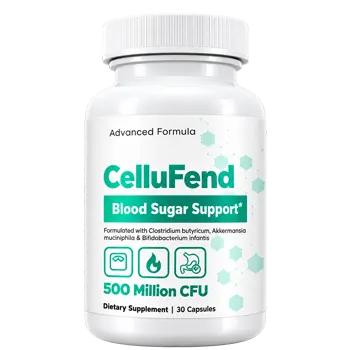
CelluFend – Best Inulin Capsule With Added Resistant Starch
Overall Rating:
*All the prices listed here are as they appear on their websites and are subject to change.
- Comes as a once-daily capsule, with 30 capsules in a bottle.
- Lists chicory inulin, potato resistant starch and a probiotic blend on the label shown by several brand-linked sites.
- Offers bundle pricing that drops the cost per bottle.
- Backed by a 60-day money-back guarantee.
CelluFend is built around a plant-based, non-GMO formula designed to support healthy blood sugar levels and weight management. It’s a good fit if you prefer an easy-to-swallow, stimulant-free capsule and want a straightforward daily supplement without mixing powders or preparing drinks.
- Form: Capsule
- Type: Supplement
- Brand: CelluFend
- Benefit: Gut-focused daily support
- Active Ingredients: Chicory inulin (211 mg per capsule on the label described by brand-linked sites), potato resistant starch, probiotic blend
- Dosage: 1 capsule daily, preferably with a meal
- Price: $138* for 2 bottles
Pros
- Simple once-a-day routine
- Inulin paired with resistant starch, another fiber that gut bacteria use
- Bundle pricing brings the per-bottle cost down
- Third-party testing and GMP manufacturing stated by the brand
- 60-day money-back guarantee
Cons
- Individual results may vary.
- Should not replace prescribed diabetes treatment or medical care.
- Requires consistent daily use.
Feeling stronger and more energized
After two weeks, I noticed my blood sugar readings becoming more balanced, and I felt stronger and more energized. It has made a noticeable difference in how I feel day to day. – Tom
Feeling more in control
I used to constantly worry about my blood sugar throughout the day. Since trying CelluFend, I’ve felt more in control and less worried about sudden changes. – Linda
CelluFend can make sense as a capsule with inulin and resistant starch, as long as you judge it on the label and not the sales copy. Expect gentle prebiotic support, not a medical result. If you take diabetes medication or manage a health condition, talk to a healthcare professional before adding it.
Why It Earned a Spot on Our List
What stood out to us:
- Chicory inulin plus potato resistant starch in one capsule
- Probiotic blend in the same formula
- Once-daily routine
- Bundle pricing and a 60-day guarantee
Where basic inulin capsules focus on a single fiber source, CelluFend combines prebiotic fibers with probiotics. That makes it a more varied option for people looking for multiple gut-supporting ingredients in one daily formula.
Expert Evaluation
Reviewed by the Health Insiders Nutrition Research Team
Our editors reviewed the ingredient list, the research behind the main ingredients, the manufacturing standards, label clarity and the customer feedback published by the brand.
Our Findings
CelluFend works like a prebiotic-plus-probiotic formula, combining chicory inulin and potato resistant starch with beneficial bacteria. The combination makes sense for people looking for broader digestive support in a capsule. The once-daily format adds convenience, though capsules generally provide less fiber than dedicated powders, which is an important trade-off for anyone prioritizing fiber intake.
What Our Tester Says
Our tester, Dwane Turner, found CelluFend easy to incorporate into his daily routine, particularly because the capsule format required no mixing or preparation. The once-daily routine was straightforward, and the combination of chicory inulin, potato resistant starch, and probiotics gave the formula a broader approach than a basic single-ingredient prebiotic supplement.
Dwane also appreciated having prebiotic fibers and probiotics together in one formula. However, digestive experiences can vary depending on factors such as diet, existing fiber intake, gut sensitivity, and individual health. He felt that consistent use alongside a balanced, fiber-rich diet made the most sense for evaluating the product.
Ingredient Quality 4.5/5

Dwane appreciated the combination of chicory inulin, potato resistant starch, and probiotics, giving the formula both prebiotic and probiotic components.
Formula Transparency 4.4/5

Dwane liked being able to identify the key ingredients in the formula and understand how the different components fit into a daily supplement routine.
Safety Profile 4.3/5

Dwane found the once-daily capsule straightforward, though he noted that prebiotic fibers may cause temporary gas or bloating in some users, particularly when first introduced.
Other Inulin Supplements That Nearly Made Our List
The two products below have a narrower appeal than the three picks above. One is a straightforward chicory root inulin capsule, and the other is a greens powder focused more heavily on fiber grams. Both are worth understanding before you decide which format fits your routine.
Alkalean GLP-1 Advanced Support – Best Chicory Root Inulin Formula
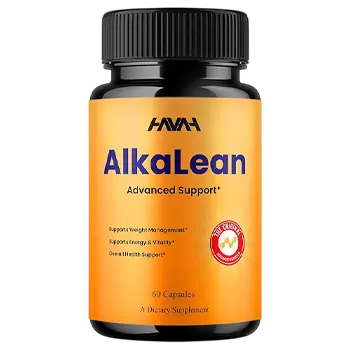
Our Rating
Alkalean GLP-1 Advanced Support is a once-daily capsule with three parts. Each capsule holds 211 mg of chicory root inulin, 100 mg of potato resistant starch and a 36 mg probiotic blend of Bifidobacterium infantis, Clostridium butyricum and Akkermansia muciniphila. There are 30 capsules per bottle. The name points to GLP-1, but this is a fiber and probiotic supplement, not a prescription GLP-1 drug, and it works through a different route.
Key Specs
- Form: Capsule
- Type: Supplement
- Brand: Alkalean
- Benefit: Supports gut balance and feelings of fullness as part of a healthy routine
- Active Ingredients: Chicory root inulin, potato resistant starch, probiotic blend
- Dosage: 1 capsule daily
- Price: $79.00*
- Where to Buy: Amazon
Alkalean GLP-1 Advanced Support Pros & Cons
Pros
- Short, easy-to-read label with amounts listed
- Chicory root is a well-known inulin source
- Simple one-capsule routine
- Stimulant-free
Cons
- 211 mg of inulin is small next to the 5 to 20 g used in studies
- The GLP-1 name can lead buyers to expect drug-like results
- Research on similar ingredients didn’t test this finished formula
Alkalean GLP-1 Advanced Support Customer Reviews
Easy Capsules That Fit My Daily Routine
The two-capsule serving has been simple to add to my daily routine. I take it with a meal as directed, and so far, I’m pleased with how convenient the supplement is to use. – Daniel R.
Convenient Formula With a Straightforward Daily Serving
I like that the directions are uncomplicated and only require two capsules daily. My experience has been generally positive, although I think I’ll need more time before deciding how well it works for me. – Melissa T.
Summary: Alkalean is a tidy, easy-to-take capsule for people who want a small daily dose of chicory inulin next to resistant starch and probiotics. It isn’t a substitute for a prescription medication, and the fiber load is light. Pick it for the simple routine, not for big promises. If blood sugar support is your main goal, our best berberine supplements guide covers a category with more clinical research behind it.
Barton Nutrition Fiber Greens – Best for Daily Fiber Grams
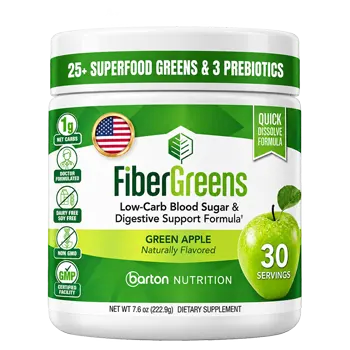
Our Rating
Barton Nutrition Fiber Greens is the fiber-heavy pick. Each scoop holds a 5.2 g prebiotic digestive blend of psyllium husk, organic inulin from Jerusalem artichoke root and acacia gum, which gives 4.4 g of dietary fiber. An 850 mg superfood greens blend and chromium are added. If you want real fiber grams and not a capsule’s worth, this is the closest thing on the list.
Key Specs
- Form: Powder
- Type: Supplement
- Brand: Barton Nutrition
- Benefit: Supports digestion and daily fiber intake
- Active Ingredients: Psyllium husk, organic inulin (Jerusalem artichoke root), acacia gum, superfood
- Dosage: 1 scoop daily
- Price: $49.00*
- Where to Buy: Amazon
Barton Nutrition Fiber Greens Pros & Cons
Pros
- Three fiber sources in one scoop, for 4.4 g of dietary fiber
- Inulin from Jerusalem artichoke root
- Powder that mixes into a drink
Cons
- The inulin share of the 5.2 g blend isn’t broken out
- Psyllium is bulky, so drink plenty of water
- Adding a lot of fiber at once can cause gas and bloating, so start slow
- Powder is less convenient than a capsule
Barton Nutrition Fiber Greens Customer Reviews
Easy Daily Fiber With Plenty Of Superfoods
I enjoy mixing Fiber Greens into my morning drink. The combination of psyllium, inulin, acacia fiber, and superfoods fits nicely into my routine, and I appreciate getting four grams of prebiotic fiber. – Rachel M.
Good Fiber Blend But Taste Takes Adjusting
The fiber and superfood combination is appealing, and the powder mixes reasonably well. The flavor took me a few servings to get used to, but overall it has been easy to use consistently. – David K.
Summary: Barton Fiber Greens suits people who mainly want to close a fiber gap. It won’t feel as tidy as a capsule, but it delivers far more fiber per serving than anything else here. Start with half a scoop if your gut is sensitive.
Best Inulin Supplements Comparison Table (2026)
| Products |  WOWMD® Apple Cider Vinegar Capsules WOWMD® Apple Cider Vinegar Capsules |  WOWMD® Reds Superfood WOWMD® Reds Superfood |  CelluFend CelluFend |
| Rating | 4.8 |  4.7 4.7 | 4.5 |
| Cost | $41.60* | $55.20* | $138* |
| Dosage | 2 capsules daily | 1 scoop daily | 1 capsule daily |
| Best For | Simple gut routine with a probiotic and enzymes | A daily fruit-and-veggie drink | Inulin plus resistant starch |
| Recommended | Expert’s Recommended | Highly Recommended | Worth Considering |
| Money-Back Guarantee | 60 Days* | 60 Days* | 60 Days* |
| Buy | Buy Now | Buy Now | Buy Now |
How to Choose the Best Inulin Supplement?
Inulin Amount: Look for a stated amount. Studies mostly used 5 to 20 g a day, and retail servings often hold far less. If the label hides the number inside a blend, that’s a red flag.
Source: Chicory root and Jerusalem artichoke are the two common sources. Both work as prebiotic fiber.
What It’s Paired With: Probiotics, enzymes and other fibers can round out a formula, but they also make the label longer. Pick the pairing that fits your goal.
Form and Convenience: Capsules are easy but small. Powders deliver more fiber but need mixing. Choose the one you’ll actually take every day.
Start Low: Inulin ferments in the gut, so a big first dose can cause gas. Ease in over a couple of weeks.
Safety and Third-Party Testing: Choose brands that show GMP manufacturing and third-party testing, and read the caution section on the label.
Money-Back Guarantee: Sixty days gives you time to judge results. Read the fine print, because many guarantees only cover a first single-bottle purchase.
Marketing Red Flags: Any product that promises to cure a disease, or says a fiber can replace medication, isn’t worth your money.
Common Ingredients Found in the Best Inulin Supplements

Inulin
Inulin is a fermentable soluble fiber naturally found in foods such as chicory root and Jerusalem artichoke. It passes largely undigested into the colon, where gut microbes can use it as a substrate. A systematic review of human studies found that 5–20 g/day consistently increased Bifidobacterium, although other microbiome effects varied between studies

Potato Resistant Starch
Resistant potato starch escapes much of digestion in the small intestine and reaches the colon, where microbes can ferment it. This gives it prebiotic-like properties and means it can influence the composition of the gut microbiome. Human trials have examined doses of resistant potato starch and reported microbiome changes, although responses can differ considerably between individuals.

Probiotics
Live bacteria such as Lactobacillus, Bifidobacterium and Akkermansia muciniphila. They’re often paired with inulin so the fiber has something to feed. If you want to add live bacteria alongside your prebiotic fiber, our guide to the best probiotic supplements breaks down the top strains and formulas. Studies say certain strains may help influence the intestinal microbial community and support normal digestive function. However, probiotic effects are strain-specific, so benefits demonstrated for one strain should not automatically be applied to every probiotic supplement.
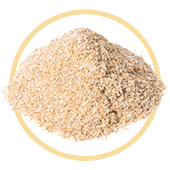
Psyllium Husk
Psyllium is a water-holding soluble fiber commonly used to increase dietary fiber intake and support bowel regularity. By retaining water, it can help increase stool moisture and influence stool consistency. Randomized research in people with constipation has found improvements in bowel movement frequency and stool-related measures with psyllium supplementation.

Acacia Gum
Acacia gum, also called gum arabic, is a soluble fermentable fiber obtained from Acacia trees. Human research cited in scientific reviews suggests that consuming acacia gum can influence bacteria such as Bifidobacterium and Lactobacillus. Its fermentation by gut microbes may also produce short-chain fatty acids, although effects depend on dose and individual microbiota.
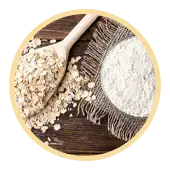
Oat Fiber
Oats contain both soluble and insoluble fibers, with beta-glucan being their best-studied fermentable soluble fiber. Research suggests oat consumption and oat beta-glucan can influence gut microbial composition and microbial production of short-chain fatty acids. However, generic “oat fiber” ingredients can differ from concentrated beta-glucan, so the product label matters.

Digestive Enzymes
Digestive enzymes help break carbohydrates, proteins and fats into components the body can absorb. Supplemental enzymes have established uses in specific situations, such as pancreatic enzyme insufficiency and lactase supplementation for lactose intolerance. A PubMed study suggests that multi-enzyme blends such as DigeZyme® are marketed for broader digestive support, but evidence for individual commercial blends should be evaluated separately.
Benefits of Inulin Supplements
Supports Beneficial Gut Bacteria: Inulin acts as a prebiotic, providing fuel for beneficial gut microbes. Human studies most consistently show increases in Bifidobacterium with inulin intake.
Helps Increase Daily Fiber Intake: Inulin contributes soluble fiber to the diet and can help supplement fiber obtained from fruits, vegetables, legumes, and whole grains.
Supports Bowel Regularity: By influencing the gut environment and stool characteristics, inulin may support more regular bowel movements, particularly when consumed consistently.
Supports Digestive Wellness: Fermentation of inulin by intestinal bacteria produces short-chain fatty acids that contribute to a healthy environment within the colon.
Complements Probiotic Supplements: Inulin is frequently paired with probiotics because it provides fermentable material that certain beneficial bacteria can use for growth.
May Support Feelings of Fullness: As a fermentable fiber, inulin may contribute to satiety and appetite regulation, although responses vary and it should not be considered a weight-loss treatment.
Offers a Convenient Prebiotic Fiber Source: Inulin is available in capsules, powders, and blended supplements, making it relatively easy to incorporate prebiotic fiber into different daily routines.
How Do Inulin Supplements Work? What Does Science Say?
Inulin is not digested in your small intestine and arrives in the colon more or less undigested. There, the gut bacteria break it down and create short-chain fatty acids, which are fuel for the cells lining the colon.
The data obtained from the human experiments appear to be encouraging, but not flawless.
Each study has its own dosage, duration and subject population. The overwhelming majority of changes are evident in the microbiome, and the one that has been supported the most is an increase in Bifidobacterium. Generally, larger claims such as weight loss or blood sugar levels cannot be relied upon as promises and are supported by smaller evidence.
There’s also a dose gap. A capsule containing a couple hundred milligrams of inulin is not really a study dose of 5 grams or more. Don’t expect a little amount to be worth nothing, but do keep expectations pragmatic. Most benefits take weeks to develop and vary from individual to individual.
Are Inulin Supplements Safe to Use?
For most healthy adults, inulin is considered safe. It has GRAS status from the FDA, and intakes under about 40 g a day have been reported as safe in healthy adults. The most common side effects are nausea, bloating and gas.
People with inflammatory bowel disease or allergies should be careful. Inulin is also a FODMAP, so people who are sensitive to those fibers, including many with IBS, may feel worse and should start very low or skip it.
Quality is the other risk. Choose brands with full labels, and avoid anything sold with wild claims. If you take prescription medication or have a medical condition, check with a healthcare professional before starting.
Side Effects, Interactions, and Who Should Not Take Them?
Possible Side Effects:
- Gas and bloating
- Nausea
- Stomach cramps
- Loose stools at higher doses
- Heartburn or itching in some people
Who Should Be Careful:
- Anyone with inflammatory bowel disease
- People with IBS or a known sensitivity to FODMAPs
- People with allergies to chicory, artichoke or related plants
- Anyone who is pregnant or nursing
- Anyone taking medication or managing a medical condition
- People under 18
Who Should Consider Using Inulin Supplements?
- People Who Don’t Eat Much Fiber: A supplement can help fill the gap while you work on food.
- Anyone Looking for Prebiotic Support: Inulin is one of the most studied prebiotic fibers.
- People Who Like Simple Routines: A single capsule or scoop is easy to remember.
- Those Who Already Take a Probiotic: Adding a prebiotic can give those bacteria more to work with.
Tips for Getting the Most Out of Your Supplement
- Start Low and Go Slow: Begin with a small amount and build up over a couple of weeks.
- Drink Water: Fiber works best with plenty of fluids.
- Take It Consistently: Same time every day, ideally with a meal.
- Eat More Fiber From Food: Supplements work best next to vegetables, beans, fruit and whole grains. Fiber is only one part of the picture, so it helps to pair it with the other habits in our five ways to keep your gut healthy.
- Give It Time: Judge a product after a few weeks, not a few days.
- Talk to a Professional First: This matters most if you take medication or have a gut condition.
Foods That Naturally Contain Inulin
- Chicory Root: One of the richest natural sources of inulin and a common ingredient in prebiotic fiber supplements.
- Jerusalem Artichoke: Naturally high in inulin and an easy way to add more prebiotic fiber to the diet.
- Garlic and Onions: Everyday foods that provide smaller amounts of inulin along with other plant compounds.
- Leeks and Asparagus: Vegetable sources of inulin that also add fiber and variety to meals.
- Bananas and Wheat: Provide smaller amounts of inulin, but regular servings can contribute to overall daily intake.
Pair these foods with vegetables, fruits, legumes, whole grains and enough water, and you’ve covered the basics of a fiber-rich diet. An inulin supplement can then help fill gaps when your regular diet falls short.
Final Verdict
There isn’t one perfect inulin supplement. The best choice depends on whether you want a small daily capsule, a fruit-and-veggie drink or a proper fiber scoop.
WOWMD® Apple Cider Vinegar Capsules took the top spot for pairing inulin with a probiotic and enzymes in a simple routine. WOWMD® Reds Superfood suits people who’d rather drink their supplement. CelluFend has a sensible formula idea, but its sales copy asks for caution. Alkalean is a tidy, short-label capsule, and Barton Fiber Greens is the one to pick if you want fiber grams.
If digestive trouble keeps coming back, book a checkup too. It can point to something a supplement won’t fix.
Frequently Asked Questions
Q: What does inulin do?
A: Inulin is a soluble fiber that gut bacteria ferment. In human studies, the most consistent result is an increase in Bifidobacterium.
Q: How much inulin should I take?
A: Studies mostly used 5 to 20 g a day. Many supplements hold much less, and starting low is a good idea.
Q: Will inulin cause gas?
A: It can. Gas and bloating are the most common side effects, especially at higher doses or when you start too fast.
Q: How long before I notice a difference?
A: Most people need a few weeks of steady use. Some brands describe benefits building over several months.
Q: Is inulin safe for daily use?
A: Most healthy adults tolerate it well at label doses. People with IBD, IBS or allergies should talk to a professional first.
Q: Can I take inulin with probiotics?
A: Yes. Many formulas pair them, and the fiber gives the bacteria something to feed on.
Q: Is inulin the same as psyllium?
A: No. Inulin is a fermentable prebiotic fiber. Psyllium is a bulking fiber that absorbs water. Barton Fiber Greens uses both.
Q: Does inulin help with weight loss?
A: The evidence is thin. Treat any weight-loss claim with caution.
Q: Which is the best inulin supplement?
A: WOWMD® Apple Cider Vinegar Capsules earned the top spot for its balanced formula, simple routine and 60-day guarantee.
7 Sources
Health Insiders relies on peer-reviewed studies, academic research institutions, and medical associations. We avoid using tertiary references. You can learn more about how we ensure our content is accurate and current by reading our editorial policy.
[1] The effects of inulin on gut microbial composition: a systematic review of evidence from human studies https://pubmed.ncbi.nlm.nih.gov/31707507/
[2] Consumption of resistant potato starch produces changes in gut microbiota that correlate with improvements in abnormal bowel symptoms: a secondary analysis of a clinical trial https://pmc.ncbi.nlm.nih.gov/articles/PMC11600726/
[3] Intestinal microbiota in health and disease: Role of bifidobacteria in gut homeostasis https://pmc.ncbi.nlm.nih.gov/articles/PMC4223251/
[4] Influence of Lactitol and Psyllium on Bowel Function in Constipated Indian Volunteers: A Randomized, Controlled Trial https://pmc.ncbi.nlm.nih.gov/articles/PMC6566185/
[5] Acacia Gum Is Well Tolerated While Increasing Satiety and Lowering Peak Blood Glucose Response in Healthy Human Subjects https://pmc.ncbi.nlm.nih.gov/articles/PMC7918852/
[6] Relationship between Oat Consumption, Gut Microbiota Modulation, and Short-Chain Fatty Acid Synthesis: An Integrative Review https://pmc.ncbi.nlm.nih.gov/articles/PMC10459712/
[7] Digestive Enzyme Supplementation in Gastrointestinal Diseases https://pmc.ncbi.nlm.nih.gov/articles/PMC4923703/
Was This Article Helpful ?
![Agree - Yes]() Yes
Yes- No
![Disagree - No]()
 Yes
Yes

Health Insiders Team
The Health Insiders Team takes pride in bringing you the latest in nutritional research, skincare, healthy living, and wellness hacks. [Read Full Bio]
 Marissa Ford, MS, RD, LD
 See Our Editorial Process
 Meet Our Review Board




 This article changed my life!
 This article was informative.
 I have a medical question.
 Ask a Question
 This article contains incorrect information.
 This article doesn’t have the information I’m looking for.